
The majority of websites don’t fail because of poor writing—they fail because they lack depth and direction. Publishing dozens of random blog posts won’t make you an authority; search engines now reward topical dominance, not scattered content.
A high-quality authority site is constructed as a well-designed knowledge system, in which all the articles relate and all the pages have a purpose. This is where the good on-page SEO factors come in place, and your content is organized, relevant and aligned to the user intent. When your whole site answers all meaningful questions in a niche, it becomes the go-to resource in your space- resulting in higher rankings, reduced dependence on backlinks, and long-term sustainable traffic.
This guide breaks away from outdated advice and shows you how to build a site that doesn’t just exist—but owns a topic.
Step 1: Pick a problem, not a niche
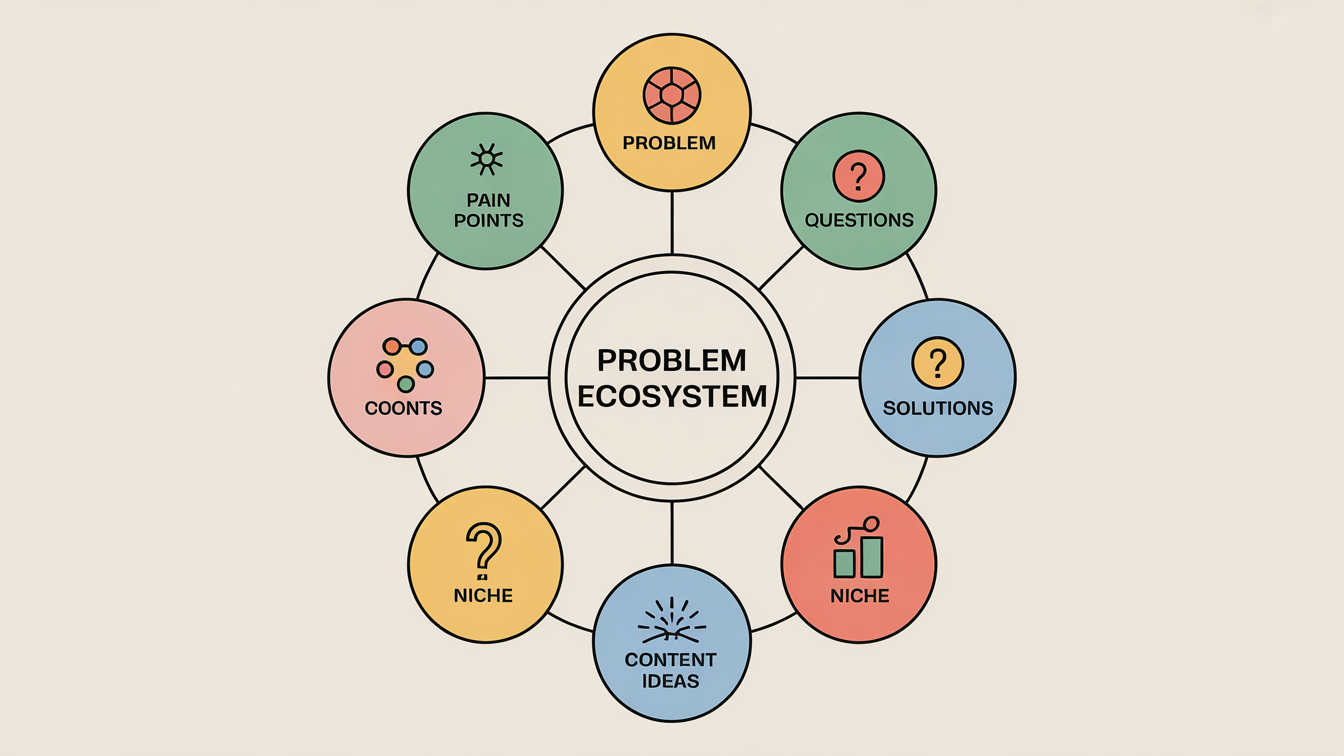
“Fitness” isn’t a niche. Neither is “marketing.” They’re whole industries, and nobody owns an industry.
Try this instead: who are you helping, and what are they stuck on?
- Too vague: an SEO blog
- Much better: helping small businesses get traffic without paying for ads
Suddenly you know who you’re writing for, what keeps them up at night, and what they’ll probably Google next. You also attract people who come back, not people who read one post and vanish.
Step 2: Map it out before you write
I know. You want to start writing. Hold off for a day.
Open a spreadsheet and list everything someone would need to know about your topic. Aim for 30 to 100 subtopics. To find them:
- Check what your competitors cover
- Look at Google’s “People also ask” boxes
- Go through the questions your customers actually email you
Then sort the list into beginner, intermediate, and advanced, and group related items together (“email marketing,” “local SEO,” and so on). That’s your topical map.
A course has a plan. A pile of posts doesn’t. You want to be building the course.
Step 3: Go deeper than everyone else
For each topic, think about how far you’ll take it:
- The basics: what it is, and how to get started
- The practical stuff: step-by-step how-tos
- The advanced material: strategies, comparisons, case studies
- Your own take: what you’ve tried, what worked, what flopped
Most people skip that last one, and it’s the one that matters. Anyone can rewrite what’s already ranking. Very few people can say, “we tried this for six months, and here’s what happened.” That’s what makes readers trust you, and it’s what search engines are increasingly trying to reward.
Step 4: Write for the questions people ask in order
Nobody searches in a vacuum. Someone learning about email marketing usually goes something like this:
- What is email marketing?
- How do I actually start?
- Which tools should I use?
- What am I probably doing wrong?
Each of those deserves its own article, and each should lead into the next. Readers stay longer, your links make sense, and your site starts to feel complete. Chasing keywords one at a time never gets you there.
Step 5: Look for what’s missing
Most people ask, “Can I rank for this keyword?” Try asking, “Have I actually answered this topic?”
Go looking for holes. Is there a question in your niche that everyone answers badly? An audience nobody’s writing for (say, “SEO for dentists”)? A spot where you could add a real example instead of another generic tip?
Those gaps are usually your easiest wins.
Step 6: Make your homepage useful
A nice-looking homepage is fine. A helpful one is better. Within a few seconds, a visitor should know who you help and where to go next. That usually means:
- One clear sentence about who you help and how
- Links to every major topic you cover
- A bit of proof, like results, credentials, or a testimonial
- Simple paths for different people (“New here? Start with the basics.” “Been at this a while? Jump to advanced.”)
- One genuinely good freebie, like a checklist, in exchange for an email
Step 7: Give each service page one job
If you sell services, resist the urge to write one page that covers everything. Write one page per problem you solve, and keep it simple:
- A headline that names the problem
- A plain explanation of what you do
- Who it’s for, and who it isn’t
- How it works, step by step
- What results to expect, with proof if you have it
- One clear next step
Then link each page to the articles that back it up. It builds trust, and it connects your services to the rest of your site.
Step 8: Link where a reader would want to click
Good internal linking isn’t about cramming in links. It’s about the moment a reader thinks, “Okay, but how do I do that?” and finds the answer one click away.
- Put links where readers would naturally want more detail
- Mix up your anchor text instead of repeating the same keyword
- Link supporting articles up to the main guide, and the guide back down to them
A quick test: reread a paragraph and ask what you’d want to click next.
Step 9: Finish One Cluster Before Starting Another
Consistency is great, but two unrelated posts a week just spreads you thin. Pick one topic cluster, cover it completely, then move on.
Say you’ve chosen email marketing. Write the beginner guide, the tools comparison, the “common mistakes” post, and a case study before you touch anything else. Then link them all together. When Google sees a dozen connected articles on one subject, it’s a lot easier to tell what your site is about than when it finds one post on email, one on SEO, and one on social media.
It’s slower at first, and it can feel like you’re ignoring other good ideas. Keep a running list of them and come back when the cluster is done. A finished cluster sends a much clearer message about what you’re good at.
Step 10: Check In Every Few Months
A site like this is never really finished. Every three months or so, open Google Search Console and look at a few things:
- Which clusters are gaining ground. These are worth building out further.
- Which pages get traffic but send readers nowhere. Add links to the next logical article, or a clearer next step.
- Which searches you show up for that you haven’t fully answered. These are easy wins. Write the article you should have written the first time.
While you’re there, refresh your older posts. Update outdated tips, add a fresh example, and fix any links that no longer work. Small updates like these often help more than publishing something new.
The whole thing at a glance
| Piece | What it is | Example |
| Problem ecosystem | The core problem you solve | Traffic without paid ads |
| Topical map | Every subtopic you plan to cover | SEO basics, local SEO |
| Content layers | Beginner to advanced depth | Basics → your own take |
| Topic clusters | Related articles grouped together | The email marketing cluster |
| Search intent chains | Questions in the order people ask them | What → How → Tools → Mistakes |
| Cornerstone content | Big pillar pages | The ultimate SEO guide |
| Supporting content | Detailed sub-articles | A keyword research guide |
| Internal linking | Links that follow the reader | Guide → Tools → Case study |
| Content gaps | What nobody’s covered well | SEO for dentists |
| Publishing plan | One cluster at a time | Finish, then move on |
Final thoughts
Honestly, most of this comes down to being patient. I’ve seen plenty of people publish twice a week for a year with nothing to show for it, and it’s usually because they never sat down and planned what the site was actually about. Building topical authority starts with that plan, not with volume.
So start small. Choose the one problem you want to be known for and list 30 things people would need to know about it. Then write about them in order, one group of articles at a time. It feels slow, and for a while it’ll feel like nobody’s reading. Stick with it anyway.
Put your own experience in every post, even the stuff that went wrong. Readers can tell when you’ve actually done the thing.
Give it a few months, then look at Search Console and see what’s working. You’ll have something people trust.
FAQs
How is this different from a regular blog?
A blog publishes posts. A topical authority site builds a full body of knowledge on one subject, and every page has a reason to exist.
Do I need hundreds of articles?
No. Coverage beats volume. A well-planned 40-page site can outperform a messy 200-page one.
Is keyword research still worth it?
Yes. Just think about topics and related questions, not single keywords.
Can I rank without backlinks?
Sometimes, especially in low- to medium-competition niches, where strong coverage and good internal links go a long way. In tougher niches, you’ll still want backlinks.
What’s the biggest beginner mistake?
Publishing without a plan. Without a topical map, growth stays slow and unpredictable.