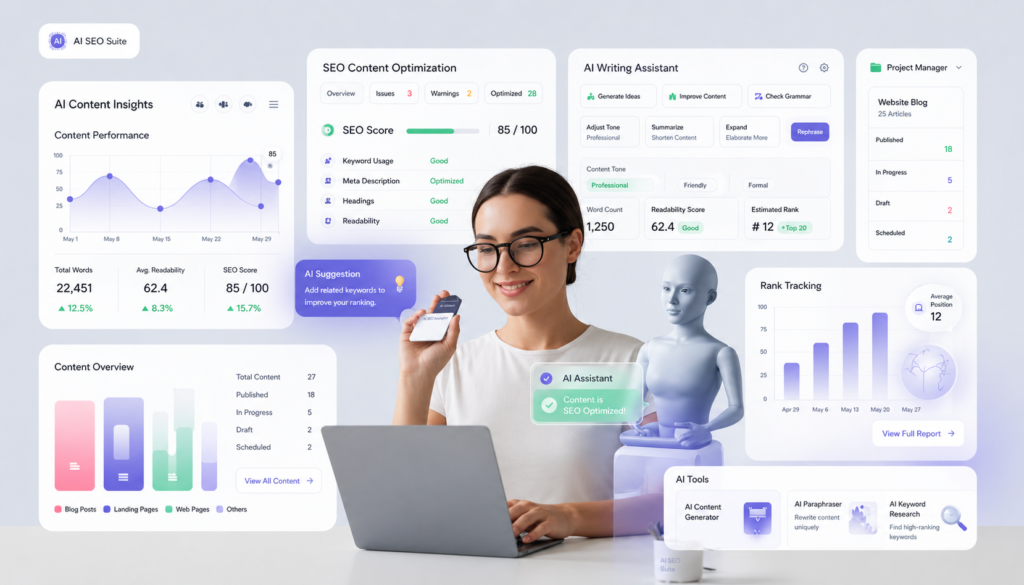
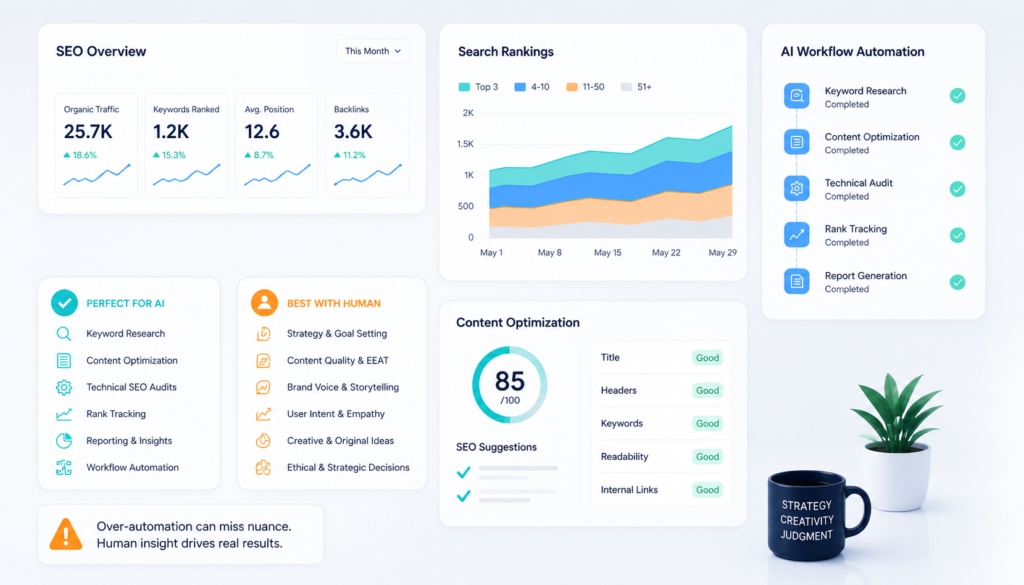
AI has revolutionized my SEO tasks. I used to waste a few hours in the past transferring between spreadsheets, finding keywords, looking at rankings and examining content performance manually. When my to-do list grew, I understood that I was spending a lot of time on the identical tasks on a daily basis that I could be investing in strategy and content quality.
That is where SEO automation tools started helping me. They did not supplant my job but rather cut down on repetitive duties and improved workflow. But not all parts of SEO can be delegated to AI. There’s still some stuff that requires human thinking, creativity and experience.
Table of Contents
1: Understanding SEO automation
2: Tasks worth automating
3: Tasks I avoid automating completely
4: My personal workflow
5: Common Mistakes People Make With SEO Automation
6: Final thoughts
Understanding SEO Automation
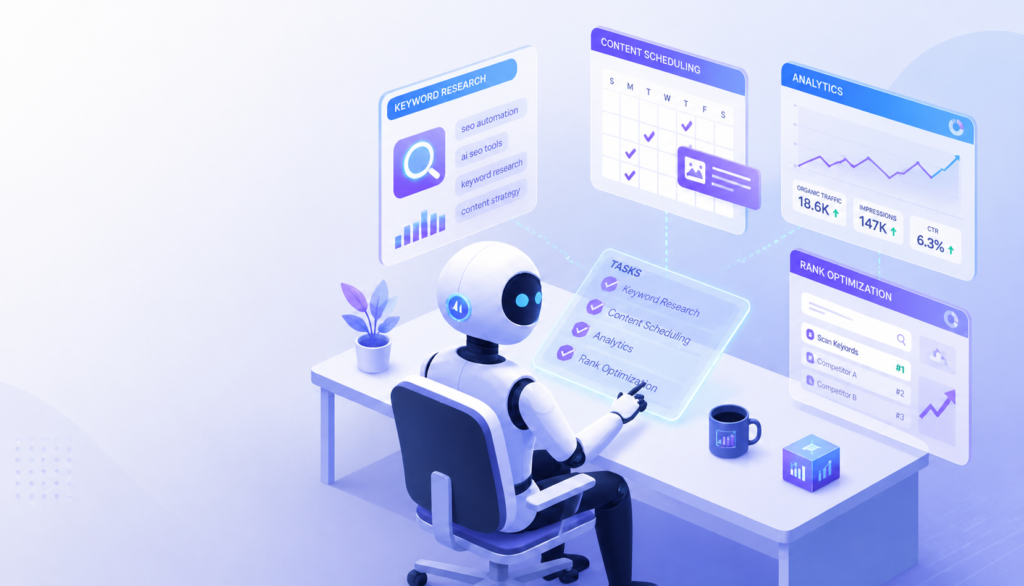
SEO automation involves the use of AI tools or software to perform repetitive tasks that would otherwise require human intervention. The systems can process a lot of data in a short time, instead of taking hours to collect data or track the changes.
The purpose is not replacing people. It is about removing repetitive actions so more time can be spent on planning and decision-making.
Tasks Worth Automating
Keyword Research Support
I still review keywords myself, but I no longer start from scratch.
When I plan blog topics, I usually begin with a broad idea and allow AI systems to generate related suggestions. Recently, while creating content ideas for my website, I received dozens of topic variations within minutes.
Instead of searching manually for every keyword possibility, I can focus on selecting ideas that actually match my audience.
Technical Website Audits
I used to check website issues manually and it became frustrating after publishing more pages.
Now I use automation for identifying:
- Broken links
- Missing metadata
- Slow-loading pages
- Redirect errors
- Crawl issues
Rather than discovering problems weeks later, I can spot them early.
Ranking and Performance Tracking
Checking rankings every day manually became difficult for me.
I remember opening multiple reports and comparing numbers one by one. Eventually I moved to automated monitoring because it saved time and provided a clearer picture.
Now I can quickly see:
- Traffic changes
- Keyword movement
- Performance trends
- Pages losing visibility
Internal Link Suggestions
I noticed another challenge after publishing more content. Finding related articles for internal linking started taking too much time.
I now allow AI systems to suggest relevant pages, but I still make the final decision myself. This gives me ideas without forcing links where they do not belong.
Common Mistakes People Make With SEO Automation
One thing I have noticed is that many people either avoid automation completely or depend on it too much. I have seen both approaches create problems. Some users still perform every task manually because they think AI will reduce content quality. Others automate almost everything and expect instant SEO results.
I made a similar mistake in the beginning. I focused heavily on speed because AI was helping me finish tasks much faster. I was going fast to publish something and was constantly checking reports but later, I found that this is not always the best method. Other articles appeared to be good until they were read, but they failed to provide useful examples and were not relevant to readers’ searches.
Another frequent problem is taking any and all advice. AI suggestions may be helpful, but don’t make decisions for them. Trends, user behaviour, audience needs are to be reviewed.
Now I treat automation as support rather than complete control. I use it for repetitive work while keeping important decisions manual. That approach helps maintain efficiency without sacrificing quality.
Tasks I Avoid Automating Completely
Publishing AI Content Without Editing
I learned this through experience.
At one point, I generated content quickly and thought it was ready for publishing. After reading it again, I noticed repeated phrases and examples that felt generic.
Since then, I use AI as a starting point instead of a final writer. I edit everything before publishing.
Search Intent Decisions
Keywords alone do not explain why users search.
For instance, someone looking for “best laptops for students” may want to purchase:
- Budget recommendations
- Product comparisons
- Reviews
- Buying advice
Software can provide suggestions, but understanding what people truly want still requires human judgment.
Brand Voice
Every website has its own style.
I do not automate personal opinions, experiences, or communication style because that usually creates content that sounds robotic.
Readers often connect more with examples and real experiences than perfectly structured text.
Strategy and Planning
Data is useful, but strategy still needs people.
I decide:
- Which topics deserve attention
- Which pages need updates
- Which audience I want to target
- Which content goals matter most
AI helps with information, but I prefer keeping decisions under my control.
My Personal Workflow
My process became much simpler after finding a balance.
I automate repetitive activities like research, tracking, and reporting. I am personally responsible for content ideas, story development, examples, and final editing.
As an instance, I could utilize seo automation tools to structure my information rapidly, but before posting I’ll make it a practice to examine each article to be sure it’s all-natural and helpful.
This will save time, without making content feel machine-generated.
Final Thoughts
AI can streamline and organize SEO practices, but it shouldn’t sacrifice quality. The top takeaway for me is the concept of using automation as an enabler and not as an end unto itself. Technology can do repetitive tasks, creativity and decision making are human abilities.
The key is to get the balance right so that you can produce content that readers are willing to trust while saving time.
FAQs
Can AI completely replace SEO work?
No. AI helps with speed and data analysis, but strategy and creativity still require human input.
Which tasks should be automated first?
Keyword research support, technical audits, tracking, and reporting are good starting points.
Is AI-generated content safe for SEO?
It can be useful as a draft, but reviewing and editing before publishing is important.
Can beginners use automation in SEO?
Yes. It can simplify many repetitive tasks and help new users work more efficiently.