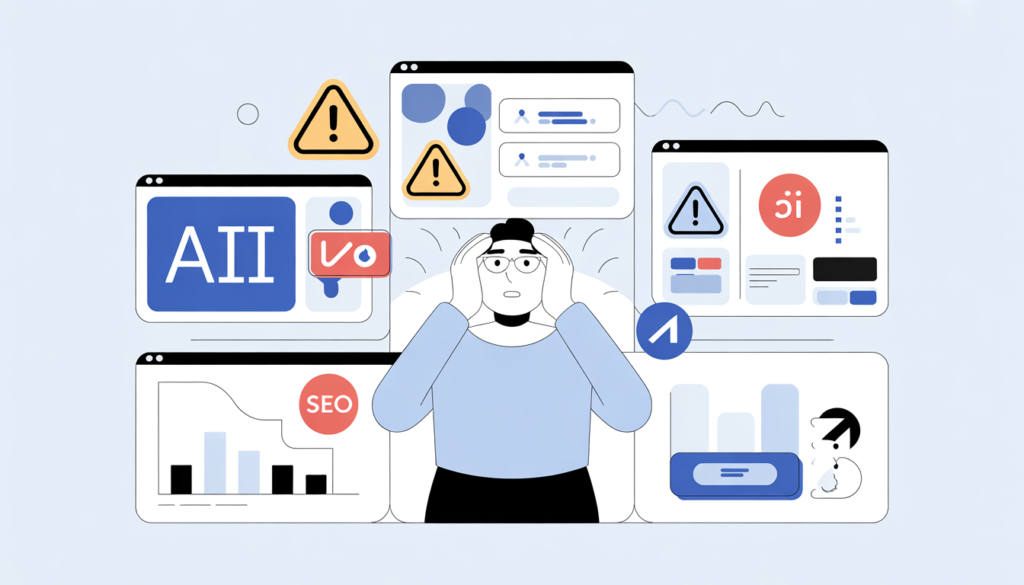
Think of AI as a sports car. It is fast and efficient but without a driver, it will stray. Likewise, the best content marketing services need strategy and human input for success. Search engines are more intelligent than ever. They not only search the words, but also look at the quality of the content, the purpose and value to the user. It means that it will not be enough to create AI text and press the publish button anymore.
What are AI SEO Tools?
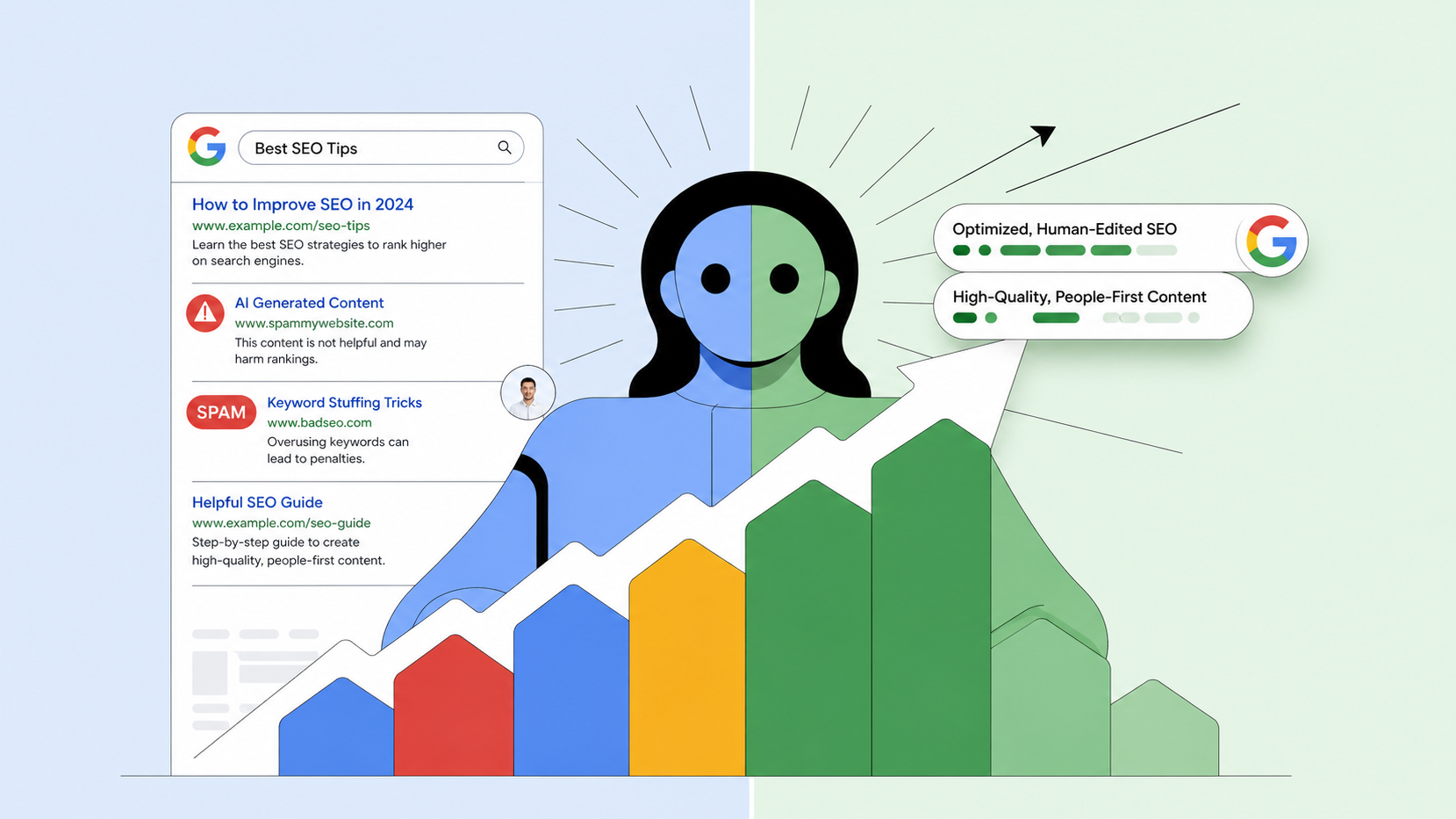
The AI SEO tools resemble a supercharged assistant that will never fall asleep. The tools are powered by machine learning and natural language processing to help you research keywords, brainstorm content, analyze competitors and even draft content. Take ChatGPT, Jasper or Surfer SEO – they do not replace human creativity, they complement it.
AI can generate structured outlines and data-supported suggestions in seconds instead of spending hours brainstorming.
However, this is the trick–AI is as good as the input you provide it. Your output will be generic in case your prompts are not specific. As long as your prompts are elaborate and tactical, you will have quality results that do rank. AI tools are to be employed as co-workers rather than content generators.
Why AI is Changing the Process of Content Creation ?
The process of content creation was cumbersome, costly, and resource intensive. The game has now been transformed by AI. Companies are able to generate content in large quantities without huge staff. Speed is a dangerous thing. Once people start using AI in the same fashion, the internet becomes saturated with insignificant and repetitive information.
The latest research shows that over 50% of what’s being published on the internet today is written with the help of AI. So competition is no longer merely about publishing content, but producing more helpful and valuable content than your competitors using the same tools. This also has implications for how to get quality backlinks as only the useful, unique and trustworthy content is likely to be linked to.
Does Google punish AI Content?
The official stand of Google on AI content
The biggest myth, however, should be cleared up immediately: Google does not punish AI-generated content simply because it is AI-generated.
The official policy of Google is straightforward: in case your content is useful, valuable, and not created to please search engines, but users, you are safe.
The research itself demonstrates that 86.5% of the top-ranking pages are assisted by some amount of AI help. That is all you need to know- you are not against AI, you are against people who are able to use AI more efficiently than you are.
What actually Triggers Penalties ?
Google does not care about how the content is being produced, but rather quality. What is penalized is:
- No substance that is thin.
- Articles produced in large-scale to rank.
- Copies or plagiarized information.
- Information that disregards user intent.
To be more exact, scaled content abuse refers to the creation of huge volumes of low-quality pages—whether generated by humans or AI. In the context of how AI content affects SEO, the issue isn’t the tool itself, but how it is used: mass-producing unhelpful content can harm visibility rather than improve it.
Principles to follow AI Safely
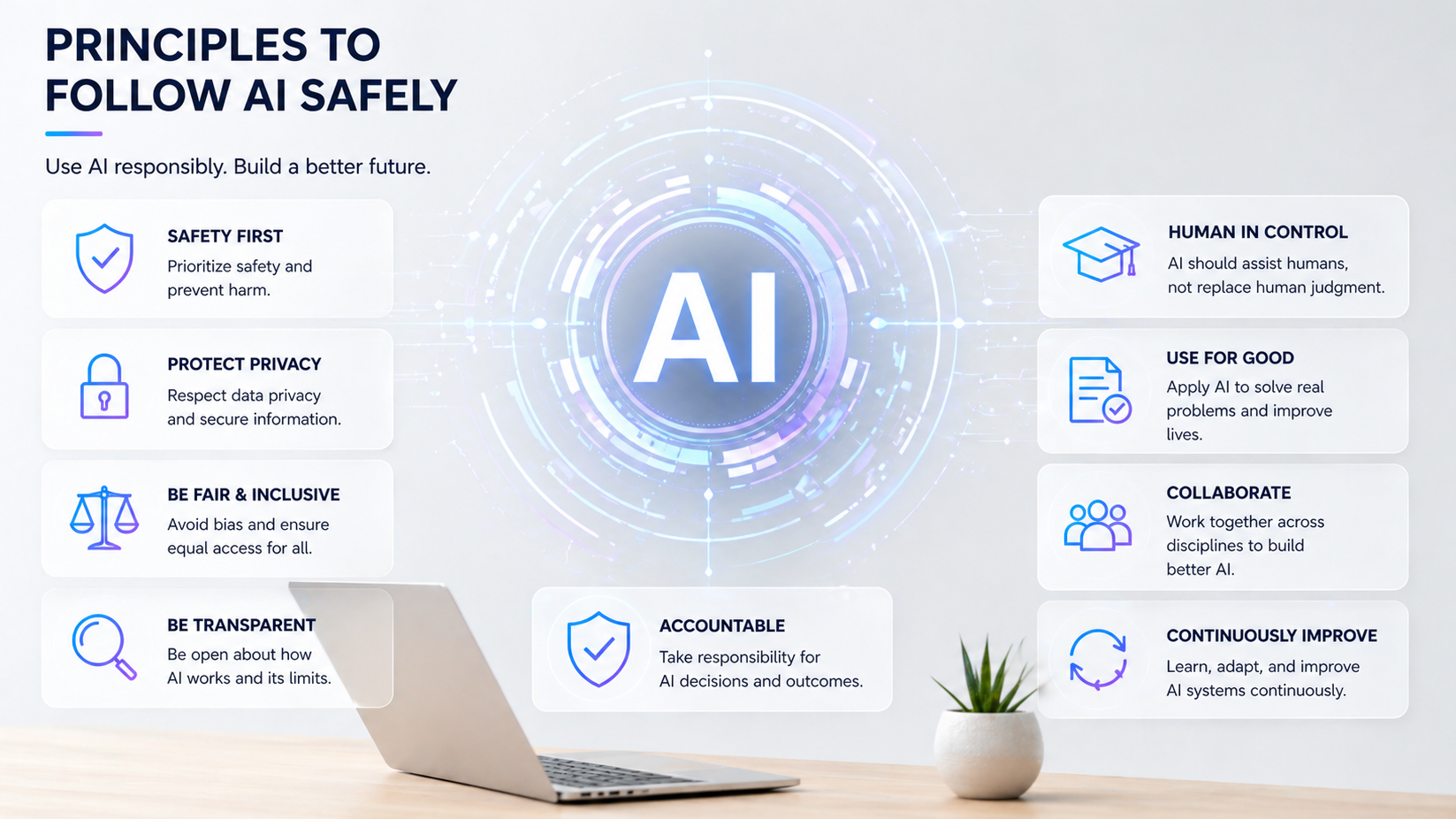
Pay attention to Quality rather than Automation
AI presents a lure to write 50 articles per week. Nonetheless, an increased amount of content does not mean elevated rankings. Not the number but the quality prevails.
No amount of optimization will make your content rank unless it provides an actual question, solves a problem or offers some form of new insight.
Non-Negotiable: Human Editing
It is not possible to publish raw AI content in a fine dining restaurant as it is like serving a plate of instant noodles.
You need to:
Add personal insights
Include real examples
Verify facts
Improve readability
Google values E-E-A-T (Authoritativeness, Experience, Expertise, Trustworthiness), which cannot be entirely achieved with AI.
Simple AI-assisted Stepwise Guide to SEO
AI Keyword Research:
Begin with AI-driven keyword tools to find search intent. Focus on:
Long-tail keywords
Low competition phrases
Question-based queries
Keywords can also be grouped with the help of AI into topics, and your content strategy will become more structured and efficient.
Creating Content Outlines
Create an outline before you write. This makes your content flow in a logical manner and address all significant aspects.
A good outline enhances user experience and search optimization.
Writing First Drafts
Write the initial draft using AI. This will save time and provide you with a starting point.
But bear in mind–this is only a start, not the end product.
Fact Checking and Human Optimization
It is here that the magic takes place. Add:
- Real-world examples
- Updated statistics
- Expert insights
AI is capable of creating content, but it is only people who can make it really valuable.
AI Content (SEO Best Practices)
E-E-A-T Framework Explained
E-E-A-T is a method used by Google to evaluate content:
| Factor | Meaning |
|---|---|
| Experience | Practical application or experience |
| Expertise | Subject knowledge |
| Authoritativeness | Technical integrity in the profession |
| Trustworthiness | Accuracy and reliability |
Without these in your content, it will not rank, AI or not.
Avoiding Thin Content
The quickest method to lose rankings is by having thin content. AI is usually writing in generic form, so you need to elaborate on it.
Ask yourself:
Will this material be something new?
In case the response is no, refine it.
Typical errors to prevent.
Publishing AI Content Raw.
This is the greatest error. Text produced by AI lacks richness and novelty.
Google is able to identify trends and demote low quality content.
Scaling Scaleless Content.
It is ineffective to have hundreds of articles published without a proper plan.
Instead, focus on:
Topic authority
Content clusters
User intent
Conclusion
AI does not pose a threat to SEO, it can be an effective ally when implemented properly. AI is not dangerous; rather, it is the abuse of this technology by individuals. When you consider AI as an easy way out, you will come up with poor content that will either be ignored or penalized. However, when you make it a weapon in promoting creativity, speed and strategy, you will have a huge competitive advantage.
The future of SEO is not human vs. AI but human + AI. The brands that are able to balance this will win search positions in the next few years.
FAQs
1. Can AI be ranked on Google?
Yes, AI content can be ranked high as long as it is of high quality, useful and optimized accordingly.
2. Is AI generated content detrimental to SEO?
No, bad content only is harmful to SEO. AI content is good as long as it is valuable.
3. To what extent is AI content safe to use?
There is no limit. The 100 percentage AI based content can be ranked provided it satisfies the quality standards.
4. Do I have to revise AI content?
Yes, human editing is needed to enhance the accuracy, originality, and engagement.
5. What is the most significant threat of AI application in SEO?
The greatest risk is publishing unedited and low-quality content at scale.