Picture a small accounting firm with a polished website, genuinely helpful blog posts, and a Google ranking stuck on page 4. The problem usually isn’t the content. Google can’t judge quality on its own, so it looks for outside signals, and one of the strongest is whether other websites link to you. Link building services exist to close that gap.
Key takeaways
- Link building services earn links to your site from relevant, trustworthy websites.
- Quality and relevance matter far more than the number of links.
- Expect 3 to 6 months before results show, and longer in competitive niches.
- Avoid guarantees, private blog networks, and vague reports.
- Domain Authority and Domain Rating are third-party scores, not Google ranking factors.
What Are SEO Link Building Services?
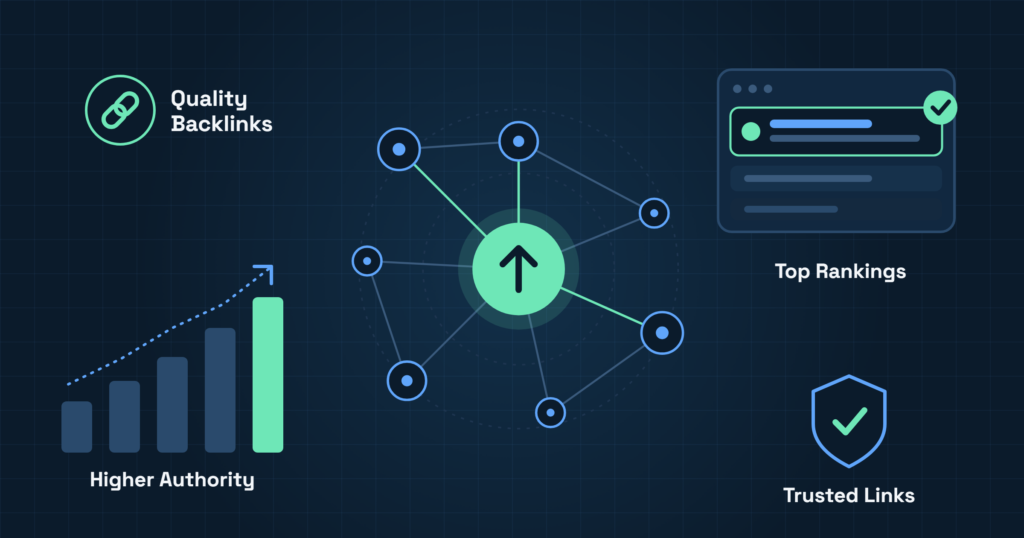
SEO link building services are professional services that earn backlinks to your website from relevant, trustworthy sites in order to improve your search visibility.
Why bother? Because a link is basically a recommendation. If a well-known industry blog links to your guide, that’s like a respected colleague saying “go talk to her, she knows her stuff.” Google notices. A hundred of those, from sites that actually make sense for your business, and Google notices a lot.
The work itself isn’t as glamorous as people think. Somebody needs to find out which of your pages to work on, create a list of websites that may be interested in paying attention to your work, write the pitches, follow up (and follow up), and make it good enough that a stranger will say yes. It is tedious, coping and rejection based. Most business owners don’t have the time, which is the whole reason agencies exist.
What Backlinks Actually Do for Your Website
Search algorithms change all the time. Links have stayed near the top of the list anyway. Here’s what you actually get from them.
Trust. Nobody wants to be the new kid nobody vouches for. A link from a respected site does more for your credibility than any amount of “about us” copy.
Visitors. People click links. Readers who arrive from a useful article are often already interested, so they tend to be better leads than random search traffic.
Faster discovery. Links help Google find and crawl new pages sooner.
Lasting value. Ad traffic dries up the moment the budget does. A good link can keep working for years with no monthly bill.
A quick word on “authority” before you get carried away. Domain Authority and Domain Rating are scores invented by Moz and Ahrefs. Google doesn’t use either one. They’re good for identifying trends, but it’s a bit like measuring your weight 10 times a day. It is important who links in with you, if it is relevant or not and if the links look natural or not.
What a Good Link Building Service Includes
Not every provider does the same job, and honestly some do very little. A solid one usually blends a few different tactics.
Backlink Audit and Competitor Research
Before anything else, someone needs to look at what you’ve already got. Maybe you have a few decent links. Maybe you’ve inherited some junk from an old agency or a dodgy directory (it happens more than you’d think). The audit sorts that out.Then, the team explores your competitors’ links, which is a speedy method to know who are already willing to link to businesses similar to yours.
Guest Posting and Content Outreach
You write something useful for another website and get a link in return. Simple idea, easy to do badly. The bad version is a keyword-heavy blog post that is neither interesting nor widely read. The good version educates a reader and resides on a site that has an actual audience. When speaking to an agency, inquire to view the sites they’ve published on. If everyone resembles a content farm, you’re better off going elsewhere.
Digital PR and Resource Links
Digital PR is the fun part. You’re making something people want to quote for: a small survey, free calculator, a chart that will make a point clear. Journalists and bloggers get it and the links come without begging. If you want to see how this approach compares with outreach-based tactics, this breakdown of digital PR strategy and traditional link building is worth a read.
Broken Link Building and Link Reclamation
Old websites rot. Pages disappear and the links pointing at them die. You spot a dead link on a relevant site, tell the owner, and offer your page as a replacement. Everybody wins. Reclamation is even easier. Somebody already mentions your brand but forgot to link, so you send a short note asking them to add one.
Red Flags to Avoid When Hiring a Provider
This is where people get burned. The industry is full of shortcuts, and some of them can drag your rankings down for months. Whether you hire a specialist or a full-service digital marketing agency, be wary if you hear any of this:
- “We guarantee page one.” Nobody controls Google. Full stop.
- Private blog networks. These are sites that exist only to hand out links. Google hates them, and so should you.
- A price that seems too good. If you’re paying a few dollars a link, ask what real person did real work for that.
- Vague reports. You should be able to see every site, URL and anchor text.
- Random sites. A casino blog linking to a dentist is worthless and a little suspicious.
Ask for case studies and a sample report before you sign anything. Good agencies are happy to share. Evasive ones usually have a reason.
How to Measure Link Building Success
Be patient. Seriously. For most campaigns, it takes 3-6 months for anything to move, and harder niches will require longer. Until then, these are good to follow:
- Referring domains: how many different sites link to you. This is more important than just the number of links.
- Rankings for the pages you actually targeted.
- Organic traffic – this is what you’ll see in Google Analytics and Google Search Console.
- Referral visits and conversions. Links should bring people who do something, not just look around.
- Domain Rating or Domain Authority is just a trend line – a very rough one at that.
A good provider sends a monthly report that connects these numbers to your goals. A list of links with no context isn’t a report.
Frequently Asked Questions
How much do SEO link building services cost?
It varies a lot. The typical small business will receive between $500 and $2,500 per month and more expensive in an overcrowded industry. Here cheap is not necessarily good. You want the provider who can tell you line-by-line what your money gets.
How long does it take to see results?
Take three to six months into account. Competitive keywords will take longer. The effect also builds – month 8 is generally better than month 4.
Are paid links safe?
Mostly no, if you mean paying a site just to put a link on it. Google’s guidelines frown on that. A team pays for research, writing and outreach is a different matter. It’s best to find out how points are awarded before you make your payment.
Is quality more important than quantity?
Yes. Five links from respected, relevant sites will usually beat five hundred from random ones. Low-quality links can also get you into trouble.
Can I do link building myself?
You can, and lots of people do, at least at first. If you want to give it a go, this guide on how to get backlinks without spam covers the basics. Just know it eats time, needs a few paid tools and takes a thick skin, since most pitches get ignored. Plenty of owners hand it off once they see the hours add up.
Do I still need great content?
Yes. Nobody links to a boring page. Content gives people a reason to link, and links get that content seen.
Final Thoughts
There isn’t a shortcut here. Authority comes from other people choosing to link to you, one relevant site at a time, and a good provider simply makes that happen faster and more reliably than you could alone.
If you’re going to start, begin with the boring part. Check your current links, decide what you want from the campaign, and pick a partner who’s open about how they work. Do that and you’ll end up with a site other people in your industry are happy to point to.
Not sure where you stand? Start with a free backlink audit: GrowthSEO