
Picture a client forwarding you a ChatGPT draft with one question: “Do we still need you?”
It’s a fair thing to ask. In under a minute, ChatGPT can produce an outline, a handful of headline options, a meta description, and a first draft that reads fine. For businesses watching their budgets, that’s hard to ignore.
So can it replace SEO writers? No. It can replace some of the work they do, and that’s a different thing.
What an SEO writer actually does
Ten years ago, SEO writing mostly meant repeating a keyword enough times that Google noticed. Those days are gone. Search engines now reward pages that are relevant, original, and useful to the person reading them, and Google’s own SEO starter guide makes that clear.
That changes the job. Good SEO writers have done a lot of work before they type the first sentence. They’ve figured out who the reader is, studied what already ranks, worked out what the searcher really wants, and decided how the piece should be structured to beat the competition. Then they write. They then partner with editors, designers and developers to connect that with traffic, leads or sales.
The article is but one of the steps in a long process.
Why so many people use ChatGPT
Speed is the obvious reason. A task that took an afternoon now takes a few minutes, and you don’t need any technical skill. You describe what you want, and it answers.
That’s why freelancers, startups, and small businesses picked it up so quickly. Bigger teams use it too, but mostly to clear out repetitive work like first drafts, FAQ sections, and product descriptions, so their writers have more time for research and editing. For many of them, AI content optimization is now just part of the normal workflow, as long as it’s done carefully enough to avoid penalties.
Used that way, it’s a good tool.
What ChatGPT can’t do
It has no lived experience. The text generated by ChatGPT is based on predicting the next words. It has never had to deal with any product, a bad customer service call or a wrong campaign. Compare two reviews of the same phone. One rewrites the spec sheet. The other comes from someone who used it for three weeks and can tell you the battery lasted twelve days, an update introduced a bug, and the camera struggles in dim light. You’ll trust the second one, and so will Google’s quality raters.
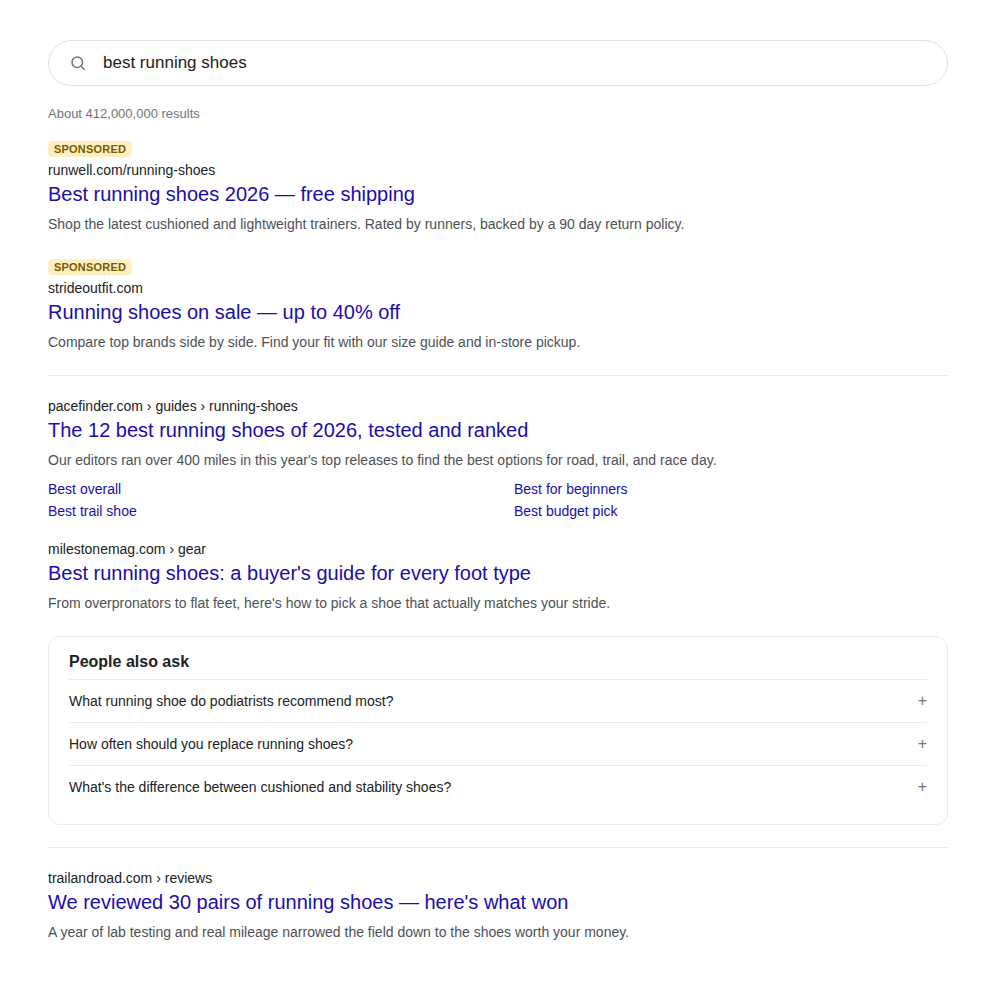
It doesn’t read the search results. It can write about nearly anything, but it isn’t studying the results page, working out why certain articles rank, or spotting what they all miss. Not every search is the same, either. Someone looking for information, someone comparing options, and someone ready to buy want different pages, and understanding search intent is still a human call. This is probably the biggest gap between a professional and a text generator.
It makes things up. Hallucinations are real. Every AI-written claim, stat, and quote needs checking before it goes live, which is why careful AI content editing always includes a fact-check pass.
It doesn’t know your brand. Unless you explain your audience, positioning, and tone every time, it guesses. A writer who has spent months inside a company just knows these things.
It sounds like everyone else. Many people ask similar questions and get similar answers. Someone has to make the result distinct.
What Google actually says
Google has said fairly clearly that it doesn’t care whether a human or a machine wrote the content. It’s concerned with whether the content is useful, trustworthy, and geared toward people and not search engines. AI content falls under no automatic penalty, but thin, inaccurate and mass-produced content will fail, regardless of who wrote it.
E-E-A-T (Experience, Expertise, Authoritativeness, Trustworthiness) is the framework Google’s quality raters use to judge content. It is not a mere ranking flip that you can do, but it reveals what Google is looking for — pages made by people who know their stuff. That’s exactly where an unedited AI draft is weakest.
A workflow that works
The writers getting the best results split the work like this:
- Research and intent analysis (human): Check the results page, find the gaps, and decide the angle.
- Outline (AI-assisted): Let ChatGPT propose structures, then pick and adjust.
- First draft (AI): Use it to get past the blank page.
- Fact-checking and expertise (human): Verify claims, add examples, data, and firsthand knowledge.
- Editing and optimization (both): Tighten the writing, fix the tone, and handle titles, meta descriptions, and internal links.
The human steps are the ones that make the piece worth ranking.
What this means for SEO writers
Technology has changed what “writer” means before. It’s been done by word processors and spellcheck, search engines. If the repetitive part is automated, then it’s a shift in demand toward those who can think strategically and add something original.
Today’s strongest writers combine writing with keyword research, data analysis, audience understanding, and enough technical SEO to know why a page isn’t ranking. They spend less time on first drafts and more on the work AI can’t do. Those who treat AI as an assistant rather than a rival will come out ahead.
FAQ
Can ChatGPT completely replace SEO writers?
No.Good for outlines, drafts, and brainstorming, but not for strategy, subject matter knowledge or judgment.
Is AI-generated content bad for SEO?
Not by default. Google is interested in quality and usefulness. Good editing, useful content, regardless of whether it was created by AI.
Why do human writers still matter?
They possess experience, emotional intelligence, and a brand and audience understanding. Trust is established through those.
Can a business rely entirely on AI for content?
It can automate parts of the process, but publishing only raw AI output usually produces generic, repetitive content. Human review protects quality and credibility.
What’s the best way to use ChatGPT for SEO?
Use it as an outline, draft or ideas. Have an expert writer do the research, fact checking, search intent and original thought.
The bottom line
ChatGPT is fast, cheap, and easy to use, and it takes a lot of tedious work off a writer’s plate. But SEO writing was never just about producing clean paragraphs. It’s research, strategy, verification, and real expertise.
The businesses and writers who pair AI’s speed with human judgment, without cutting corners on quality, will end up with content that both ranks and earns trust.