I’ll be honest — when I first started learning SEO, I thought it was some kind of dark art. Secret codes, algorithm tricks, that sort of thing. It’s not. Most of it comes down to making your website genuinely useful and easy for search engines to understand. That’s it. The rest is details.
If you are creating a website in 2026, and you want it to be found by people in the USA (or anywhere, for that matter) via Google, then you’ve got to consider SEO, from the ground up. Not because it’s in style, but because if you don’t have it, your site is like a ghost in the shell. You may be the best and have the best material on the web, but if no one sees it, it does you no good at all! This process will be much easier if you have a proper SEO content strategy in place from the very beginning.

Why bother with SEO at all?
Here’s the thing — Google doesn’t rank pages randomly. It considers your content, your keywords, your site speed and whether your visitors really enjoy your site once they get there. If you do that right, Google will trust your site more. Get them wrong, and you’re stuck on page five, which is basically the internet equivalent of nowhere.
I used to think SEO was optional if you had good content. I was wrong. Even genuinely great websites get buried if the technical and structural side is a mess. The good news? Fixing that side isn’t nearly as hard as people make it sound — and if you’d rather have someone walk through it with you, it’s worth looking into ways to improve your website SEO instead of guessing your way through it alone.
So what is SEO, really?
Stripped down, SEO does three things for you:
- Gets more people to your site
- Makes your site easier to stumble across in the first place
- Gives you a fighting chance against competitors who are already ranking
You don’t need a marketing degree to get started. Learn the basics first — how Google crawls and indexes pages, what “ranking factors” actually means in practice — then work your way into the more advanced stuff like technical audits or backlink strategy once you’re comfortable. It builds on itself. The more time you put in, the more it starts to click.
Why it’s worth the effort
A few honest reasons to care about this:
- The traffic is free — you’re not paying per click like with ads
- It builds trust. People trust websites that show up high in search results (fairly or not)
- Small businesses can genuinely compete with bigger ones here
- More visibility usually means more leads, which usually means more sales
Getting started isn’t as scary as it looks
-
-
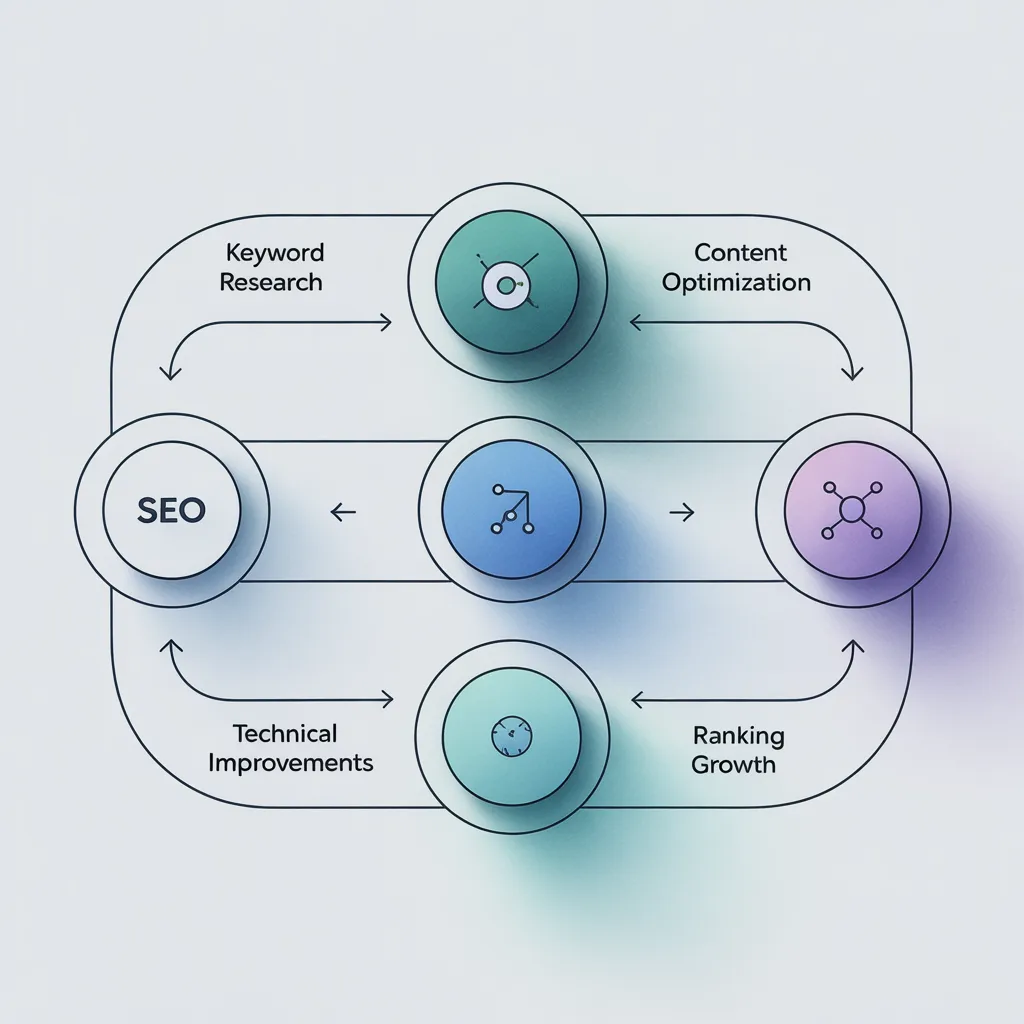
No need to be a professional. It’s all about a couple of good routines that you do regularly.
Here’s a simple, straightforward case study: I did some basic on-page optimization of a new WordPress website that was optimized for low-competition keywords — nothing special. Simply optimized page titles, improved internal linking, and page speed. About six weeks in, impressions started climbing in Google Search Console. Was it dramatic? No. However, it was a real measurable movement and it was not done with any special “hocus pocus”.
Pick keywords you can actually rank for. Tools like Google Autocomplete or Ubersuggest are great for this. Don’t go after “SEO” — you’ll be competing with massive, established sites. Go after something like “SEO tips for beginners 2026” instead. Longer, more specific phrases (called long-tail keywords) are much more realistic when you’re starting out.
Write content that actually helps someone. This sounds obvious, but a lot of sites skip it. Answer the question your reader actually typed into Google. Don’t just fill it out to reach a word count — I don’t care how well Google gets at finding filler, readers can figure out if they’re reading it.
Use your keyword where it counts. In your main title (H1), a few subheadings (H2s), somewhere in the first 100 words and your meta description. Do not push it any other place.
Clean up the basics of your page. Short paragraphs. Bullet points where they help. Alt text on your images (this matters more than people think). Internal links pointing to other relevant pages on your own site.
Don’t ignore mobile. The majority of Americans looking up do it from their cell phone. Slow and broken sites, you’re losing visitors before they even read your content.
Tools that won’t cost you anything
You really don’t need to spend money to get moving:
- Google Search Console — shows you how your site is actually performing in search
- Google Analytics — tells you who’s visiting and what they’re doing once they’re there
- Ubersuggest — decent for generating keyword ideas
- Google Keyword Planner — useful for checking how much search volume a keyword actually gets
Between these four, you’ll have a pretty clear picture of what people are searching for and whether your site is meeting them there.
Mistakes I see beginners make constantly
- Trying to target ten keywords in one article instead of picking one and doing it well
- Copying or “spinning” content from other sites (Google notices, and readers notice too)
- Forgetting to link between their own pages
- Ignoring how their site looks and loads on mobile
- Expecting results in two weeks
That last one trips people up the most. SEO is slow. Most sites start seeing real traction somewhere between three and six months of consistent work — not overnight, no matter what some course out there promises you.
Keeping track of whether it’s working
A few numbers worth watching over time:
- Overall traffic growth
- Where your keywords rank
- Click-through rate — basically, how often people click your listing once they see it
- Bounce rate — are people leaving right away, or sticking around
- Page speed
None of these need to be perfect immediately. You’re looking for a trend, not a single good day.
If you want a bit more context on why we care so much about this stuff, here’s how we help beginners grow online.
Bottom line
SEO isn’t a trick you play on Google. It’s closer to just… taking your website seriously. Solve real problems for real people, make it easy for them to find what they need etc and the rankings follow. Just persevere through the first few months when it’s frustrating, and it pays off.
-
At growthseo.net we assist businesses in getting seen away, getting the right people to visit their website and getting good leads through smart digital advertising. We use facts and numbers to make our ads work better and not waste money.